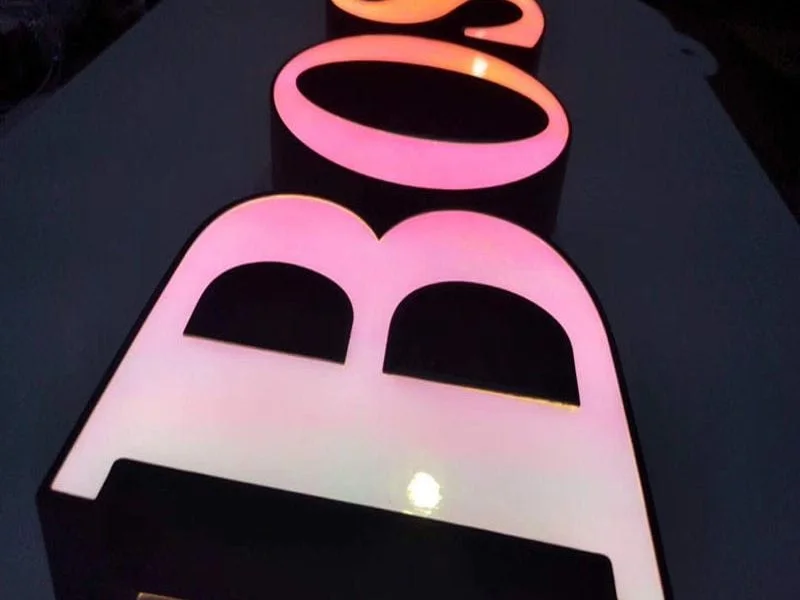
When ordering acrylic illuminated letters, mark where light should be visible. The material name alone does not tell the manufacturer whether the buyer wants a lit face, visible side glow, rear illumination or a combination. Connect the intended surfaces to the actual artwork and an identified construction proposal.
Describe the effect in plain terms
Use a reference to show the visual intention, then label the areas that should illuminate and those that should not. Explain what should be visible when the sign is off. A general instruction to make the logo glow can leave important decisions about edges, separate details and backing unresolved.
The acrylic illuminated letter option is a starting point for this review. It does not represent one universal body or confirm every possible effect from a reference image.
Keep material and construction separate
Ask which actual acrylic, face treatment and body arrangement are proposed. Material suppliers offer grades with different optical uses, so a generic description is not a complete specification. Do not assume that any named grade in external reading is included in the order without written confirmation.
| Design question | Information for review |
|---|---|
| Face | Intended off-state and illuminated appearance |
| Edges | Which sides should transmit or block light |
| Rear | Whether a wall-facing light effect is intended |
| Small details | Openings, separate marks and narrow features |
| Backing | Visible support and installation relationship |
If the buyer is choosing between constructions, use the lettering comparison to identify the intended direction. Compare defined alternatives rather than expecting a single price for several unresolved effects.

Approve changes to fine artwork
Small openings, narrow strokes or isolated logo details may lead to a proposed artwork change. Ask the supplier to show the adjustment on a new drawing issue and explain the visible consequence. The buyer should know whether a change is aesthetic, construction-related or still awaiting review.
| Approval record | Detail to retain |
|---|---|
| Original artwork | Design issue and dimensions |
| Proposed change | Marked area and reason for review |
| Construction | Surfaces and material arrangement discussed |
| Decision | Accepted issue and remaining questions |
Use the logo manufacturing review to organise that process. A screenshot showing the latest visible design should not replace a controlled file if several reviewers are still exchanging versions.
Can one sample approve every size?
Do not assume so. Identify what the sample represents and ask whether a change in size, layout or construction needs another review. A material swatch and a working letter sample answer different questions. Keep the actual sample reference and its approval limits with the order.
What should accompany the quotation request?
Send the artwork, sizes, quantities, lit-surface markings, appearance references and destination. Include the wall and cable-access context available. Review the custom channel letter range and request the trade offer with any open material or lighting decisions clearly identified.
References & further reading
External manufacturer or carrier guidance supports the terminology and general considerations discussed here. Their product specifications and policies are specific to their own services.