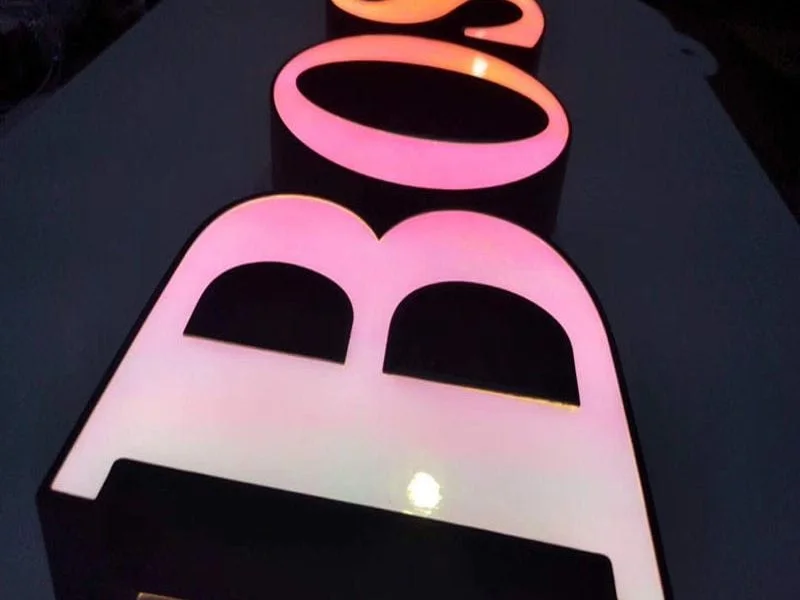
For front-lit channel letters, record the appearance of the face when the sign is off and the intended illuminated result as separate decisions. The same colour description should not stand in for both. Include visible returns and any unlit logo areas in the review so the complete letter set has one clear appearance brief.
Identify what the colour reference represents
A brand file, a physical face sample and a photograph of an illuminated sign answer different questions. Name each reference and explain its purpose. If the buyer wants the daytime identity to coordinate with an existing surface, show that context rather than asking a screen preview to prove a physical match.
Use the front-lit channel letter detail page to describe the lighting direction. The actual face material, graphic arrangement and body construction still need to be specified for the reviewed artwork.
Keep lit areas and unlit areas clear
Mark which parts of the logo should transmit light and which should remain visually dark. Review separate details, small openings and surrounding returns with the manufacturer. An attractive reference does not establish that every effect can be reproduced in every size without a construction review.
| Appearance decision | Reference to attach |
|---|---|
| Off-state face | Actual material or agreed physical appearance |
| Illuminated face | Intended lit condition and relevant review |
| Returns | Colour and visible side appearance |
| Unlit areas | Marked artwork and intended boundaries |
| Complete layout | Current revision and dimensions |
Material manufacturers offer specialised light-diffusing sheets, but the description of one material grade does not establish a complete letter's lit uniformity. Request review of the proposed face and assembly instead of treating a generic acrylic label as an appearance guarantee.

Approve a sample with a defined scope
If a sample is required, identify whether it represents the face alone, an individual letter or part of the complete layout. Record the material and the conditions under which the appearance was reviewed. Ask which changes would require another review before the batch is released.
| Sample question | Why it matters |
|---|---|
| Which surfaces are represented? | Face approval may not cover returns |
| Which size or construction is shown? | A different body can change the discussion |
| What lit condition was reviewed? | An unlit image is not a lit approval |
| Which design issue applies? | Later artwork changes need control |
Keep the sample decision with the logo artwork review. The artwork review determines what can be made; the appearance review identifies what the buyer is accepting. Neither should silently replace the other.
Should a photograph be used as the only colour approval?
Where appearance is critical, agree a more explicit review basis. Photographs and screens are useful communication aids, but they do not establish every physical viewing condition. State the actual acceptance reference and leave unresolved questions visible rather than promising identical colour in all photographs.
What information starts the order discussion?
Send the design, dimensions, quantities, off-state reference, intended lit appearance and destination. Identify any sample requirement and visible return preference. Use the channel letter product page and the cost comparison guide before requesting the trade quotation.
References & further reading
External manufacturer or carrier guidance supports the terminology and general considerations discussed here. Their product specifications and policies are specific to their own services.