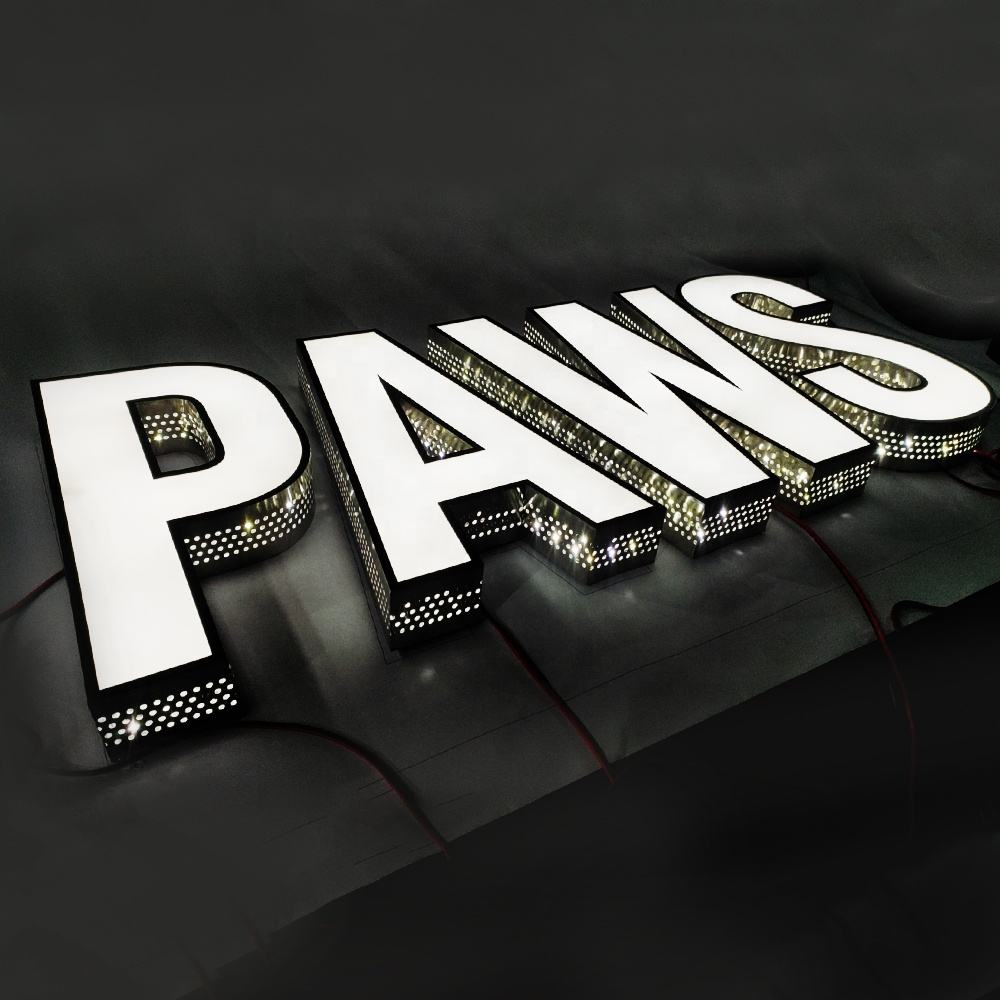
To find out whether your logo can be made as illuminated channel letters, send dimensioned vector artwork and the intended lighting effect for a manufacturing review. Overall letter height is not enough: narrow strokes, internal openings, punctuation and separate logo elements can determine what construction is feasible. Do not approve a quotation on the assumption that every detail in a screen logo can be reproduced unchanged.
What does minimum stroke width mean for a buyer?
Stroke width is the width of part of the letterform, not its overall height. In a proposed illuminated construction, narrow areas need to be reviewed alongside depth, face arrangement, internal space and the lighting proposal. A tall letter can still contain a small, difficult detail. Identify those locations on the actual artwork rather than measuring only the bounding box.
Gemini's published trimless design guide uses separate criteria for strokes, openings, serifs and different LED arrangements. That is useful evidence that the questions are construction-specific. Its numeric limits apply to its named product system; they are not AOCHUANGSIGN manufacturing limits or universal rules for all channel letters. Ask us to review your drawing instead of ordering from another supplier's size table.
Which artwork features should be reviewed before the quote is approved?
| Artwork feature | What the buyer should provide | Decision to record |
|---|---|---|
| Thin strokes | Scaled vector file and intended overall dimensions | Whether the proposed construction can preserve them |
| Small openings | Clearly defined internal shapes | Any reviewed change to the opening or construction |
| Serifs and sharp details | The original logo reference | Which visible details are retained or adjusted |
| Separate dots or marks | Each element shown in the layout | How it is manufactured, positioned and illuminated |
| Mixed letter sizes | Dimensions for the full word and small copy | Whether all elements use the same construction |
| Lighting changes | Face-lit, halo-lit or combined effect | Whether the design needs another review |
Keep proposed alternatives visible. A supplier should identify an adjusted stroke or simplified detail on a revised drawing, rather than silently changing the logo and asking you to approve a photograph later. If brand rules restrict alterations, send those rules with the original artwork.
What if a supplier says the logo needs changing?
Ask which feature is difficult and what alternative is being proposed. The discussion might involve changing the overall dimensions, reviewing a particular detail or selecting a different construction. These are alternatives for assessment, not permission to alter every brand element. Compare the visible change in a dimensioned drawing and decide who must approve it on the buyer's side.
As an illustrative review, consider a logo with large main letters and a much smaller tagline. Enlarging only the main letters does not resolve the small copy automatically. Ask whether the tagline requires a separate construction or another agreed treatment. Record the exact scope of any alternative and request a quotation against that revision.
How should the illumination be specified?
State where you want light to appear and show a relevant reference image. Separate any logo shape, letters and tagline if their effects differ. A coloured logo viewed on a monitor does not define how a material will appear when the sign is unlit or illuminated. Ask how the proposed face and lighting arrangement will be reviewed before approval.
For front-lit channel letters, discuss which visible areas transmit or block light. For halo-lit letters, include the wall and mounting context. Use the wall review guide to identify the photographs and surface information needed for that discussion.
What should the production approval contain?
- The approved vector artwork and visible drawing revision.
- Overall dimensions, units and quantity for each design.
- Agreed letter construction and lighting effect.
- Every approved artwork adjustment and its reason.
- Mounting context and unresolved questions requiring review.
- The quotation scope linked to the same approved revision.
The artwork revision checklist provides a practical handover routine. Keep the current approval separate from superseded files; a message saying use the final version does not tell the manufacturer which attachment that means.
How can you get a quote for your actual logo?
Review the custom channel letter options and send your artwork for a trade quotation with the required size, quantity, effect and delivery destination. Include any brand restrictions and identify the questions you want answered. The next useful result is a reviewed drawing and defined offer for your design, rather than a generic minimum-size promise.
References & further reading
External manufacturer or carrier guidance supports the terminology and general considerations discussed here. Their product specifications and policies are specific to their own services.