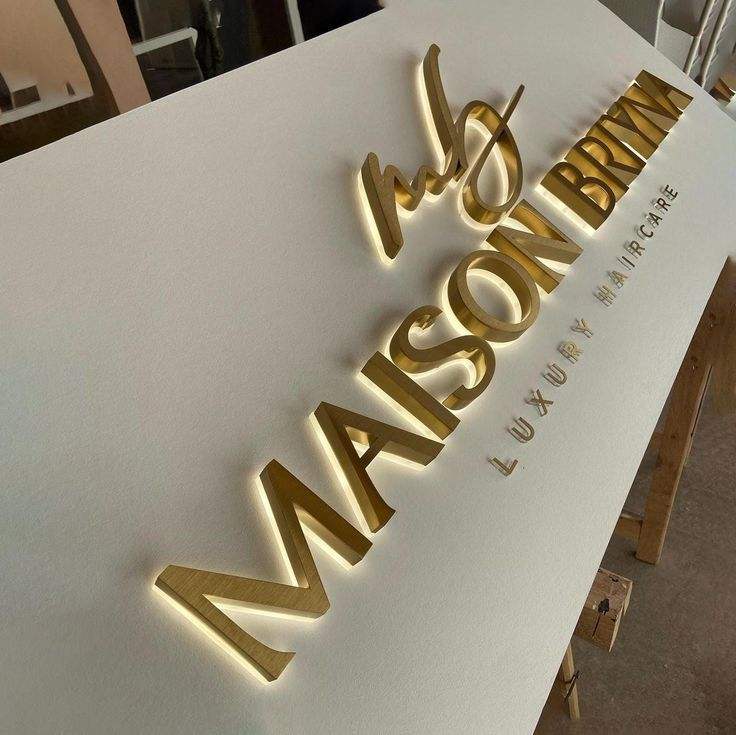
Approve a stainless steel letter sample by identifying what it represents and what decision it is meant to close. A finish swatch, a formed letter and an illuminated assembly demonstrate different things. Connect the sample to the actual material, visible surfaces and drawing issue before describing the batch appearance as approved.
Define the sample's purpose
Ask whether the sample is intended to show a surface direction, an assembled body, a colour treatment or a complete appearance in context. Record its dimensions and material description where relevant. Do not use a photograph of a small swatch as evidence of every feature in a much larger fabricated letter.
For stainless steel sign letters, material grade and surface appearance are separate specifications. A reflective or brushed finish does not by itself prove the grade. Any material evidence required by the order should be identified independently of the visual approval.
Review the surfaces the buyer will see
Record whether the face, edges and returns are included in the reference. For an assembled body, ask how differences at joins or curved areas are to be reviewed. Include the intended lighting and surroundings in the appearance discussion rather than using an unidentified photograph as the sole standard.
| Sample detail | Decision to record |
|---|---|
| Identity | Unique sample reference and issue |
| Material | Declared metal and separate evidence requirement |
| Surface scope | Face, edge, return or complete assembly |
| Viewing | Relevant light and agreed reference conditions |
| Application | Which product or batch the decision covers |
The metal finish brief helps define these fields. Stainless exposure and suitability need their own review; approving a surface appearance does not establish performance in every environment.

Close the approval without hiding questions
Separate acceptance of the visual reference from unresolved construction or installation decisions. If the buyer accepts a colour direction but still needs a rear view or fixing detail, record both facts. Ask for a revised sample or drawing when the open question affects what will be supplied.
| Approval outcome | How to document it |
|---|---|
| Appearance accepted | Name the reference and covered surfaces |
| Construction unresolved | Identify the detail and next reviewer |
| Alternative proposed | Keep the alternative distinct from the original |
| Batch release | Link the decision to the current order issue |
Keep the approval record with the lettering drawing revision. An email reply can be useful when it clearly identifies the attached reference; an isolated word such as approved can become ambiguous after several samples have circulated.
Can a future order use the same sample?
It can serve as a reference if it remains identifiable and its applicability is reviewed. State which appearance is expected to repeat and identify any change in material, size, construction or viewing context. Do not assume that a historic reference automatically approves a different product arrangement.
What should be included in a sample request?
Send artwork, sizes, requested material, appearance references, visible surfaces and the order quantity. Explain which decision the sample should resolve. Compare flat-cut and fabricated construction and request the sample scope as part of a defined quotation rather than an unspecified promise of a free finished sign.
References & further reading
External manufacturer or carrier guidance supports the terminology and general considerations discussed here. Their product specifications and policies are specific to their own services.