
Choose flat-cut or fabricated metal sign letters by the form the project needs and the construction being offered. A front-view logo does not show whether the letter is a cut profile or an assembled body. Ask the drawing and quotation to identify that distinction before comparing prices or approving a sample.
Separate thickness from body depth
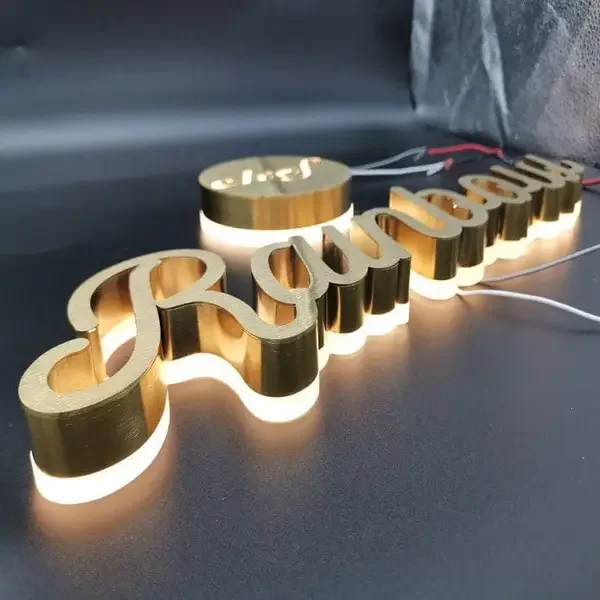
A flat-cut letter is described around its profile and material thickness. A fabricated letter has an assembled form, commonly discussed through its face and returns. In procurement, the important point is to name the dimensions being reviewed. A visible depth in a photograph is not a reliable statement of the thickness of the material used.
Show the front and side intentions with the metal sign letter brief. Identify fine outlines, detached elements and any constraints already imposed by the design. Keep a proposed construction change on a controlled drawing instead of accepting a different product under the same generic name.
Compare the actual visible surfaces
Ask which faces, edges and returns are visible in the intended position. Record their material and finish references separately where they differ. A colour such as gold does not identify the metal or the surface process, and a sample of one face does not automatically approve an assembled body's sides.
| Decision | Flat-cut discussion | Fabricated discussion |
|---|---|---|
| Form | Profile and thickness | Face, returns and body arrangement |
| Visible sides | Cut edge appearance | Return finish and body depth |
| Rear interface | Proposed attachment arrangement | Rear closure and attachment interface |
| Lighting | State any separate requirement | Define any illumination explicitly |
Use the flat-cut detail page and built-up detail page to prepare the comparison. Neither construction name establishes a complete installation or electrical scope.
Quote both against the same artwork
If the buyer is considering alternatives, ask for each offer to refer to the same design issue, overall layout and relevant element sizes. List the differences in construction, finish, fixing parts and packing. Otherwise, a cheaper total may describe different work rather than a more competitive offer for the same product.
| Comparison record | Detail to retain |
|---|---|
| Design | File issue and dimensions used |
| Material | Actual metal and required evidence |
| Finish | Approved reference and visible areas |
| Mounting | Supplied parts and local interface review |
| Quantity | Complete sets by design and size |
For stainless-specific material questions, use stainless steel sign letters. Keep the finish brief with each alternative so the comparison does not lose its appearance requirements.
Does a deeper letter always cost more?
Do not use one dimension as a universal price rule. The artwork, material, surface treatment, assembly, quantity and included scope also need review. Request defined offers for the actual alternatives. This guide does not provide an unverified price range or claim that either construction is always the best choice.
What should accompany the enquiry?
Send outlined artwork, dimensions, quantity, desired appearance, installation context and destination. Identify whether the construction is fixed or open for comparison. Request the trade offer with the differences you want reviewed clearly listed.
References & further reading
External manufacturer or carrier guidance supports the terminology and general considerations discussed here. Their product specifications and policies are specific to their own services.