
For a metal letter order, keep the approved layout and the proposed fixing interface connected to the same revision. A positioning document can help locate parts, but it should not be mistaken for proof that a wall or fixing method is suitable. Record its intended use and the information the local installer must review.
Identify the controlling layout
The approved artwork should show wording, logo elements, relevant sizes and spacing. Give it an issue identifier that also appears in the quotation and any installation-related documents. If the layout changes, identify which downstream records need review rather than assuming the original positioning aid remains correct.
Start with the metal sign letter range and the drawing revision checklist. A file named final is not a sufficient control method when several people have made changes.
Separate position from attachment design
Position describes where the lettering belongs. Attachment concerns the actual wall, access, supplied parts and reviewed fixing arrangement. A paper pattern showing locations does not establish structural suitability or replace the responsible installer's assessment. Keep those decisions separate in the handover.
| Information | What it establishes | What remains to review |
|---|---|---|
| Logo layout | Intended visual arrangement | Actual site position and interface |
| Letter dimensions | Reviewed element sizes | Local measurements and conditions |
| Positioning reference | Intended placement relationship | Its use and scale verification |
| Fixing information | Proposed parts or connection detail | Suitability for the actual substrate |
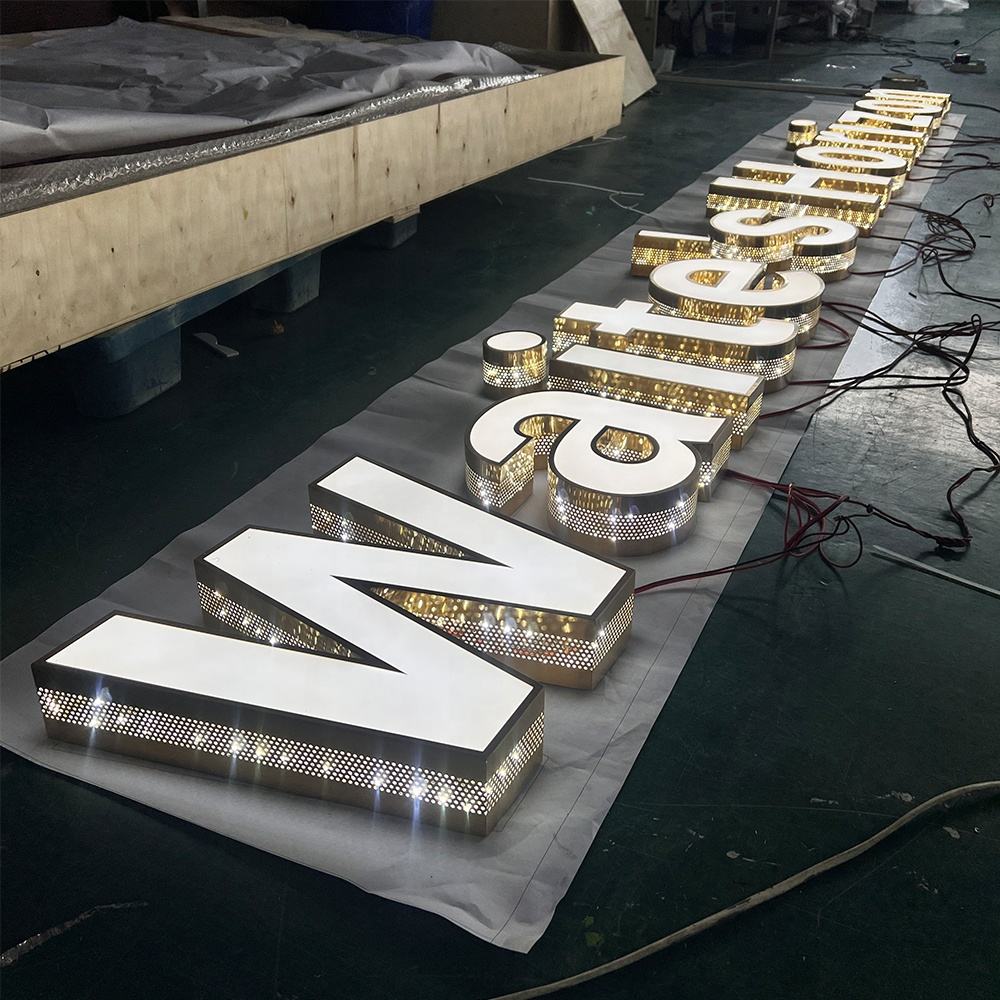
Ask which locating or fixing information is included in the order. Do not assume a product photograph demonstrates concealed attachments or that every supplied letter automatically includes a complete installation package.
Check consistency before release
The buyer should be able to reconcile the layout, component list and any positioning aid. Look for the same revision, orientation and item reference. Identify detached marks or repeated characters that could be confused. Ask for discrepancies to be resolved on an updated record rather than corrected informally on site.
| Release check | Useful question |
|---|---|
| Revision | Do all supplied references identify the accepted issue? |
| Orientation | Is the intended viewing direction clear? |
| Components | Can every separate element be identified? |
| Site | Are open substrate or access questions recorded? |
For flat-cut letters and fabricated letters, the attachment discussion may differ. Compare the actual construction and supplied parts rather than transferring an assumption from one option to another.
Can the installer print an artwork PDF as a pattern?
The intended use, dimensions and output scale need to be clear. A document resized for convenient viewing may not represent an installation reference. Ask for the agreed deliverable and verify it through the responsible project process instead of measuring a screen image.
What should the enquiry include?
Send the layout, sizes, quantity, intended mounting surface, access information and destination. State which positioning or fixing information is required for the local team. Request the trade quotation with those deliverables listed separately from the manufactured letters.
References & further reading
External manufacturer or carrier guidance supports the terminology and general considerations discussed here. Their product specifications and policies are specific to their own services.